Research on Phonemic Awareness

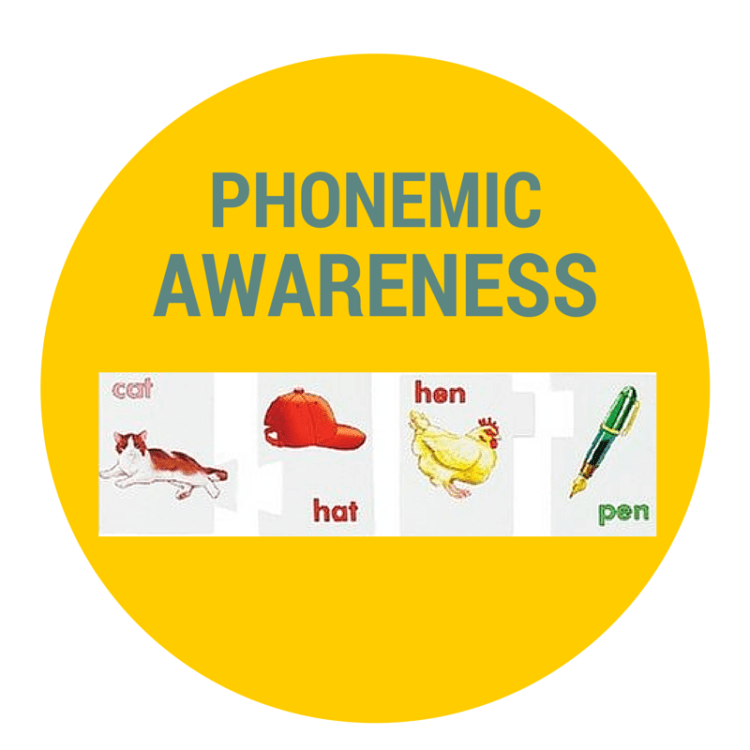
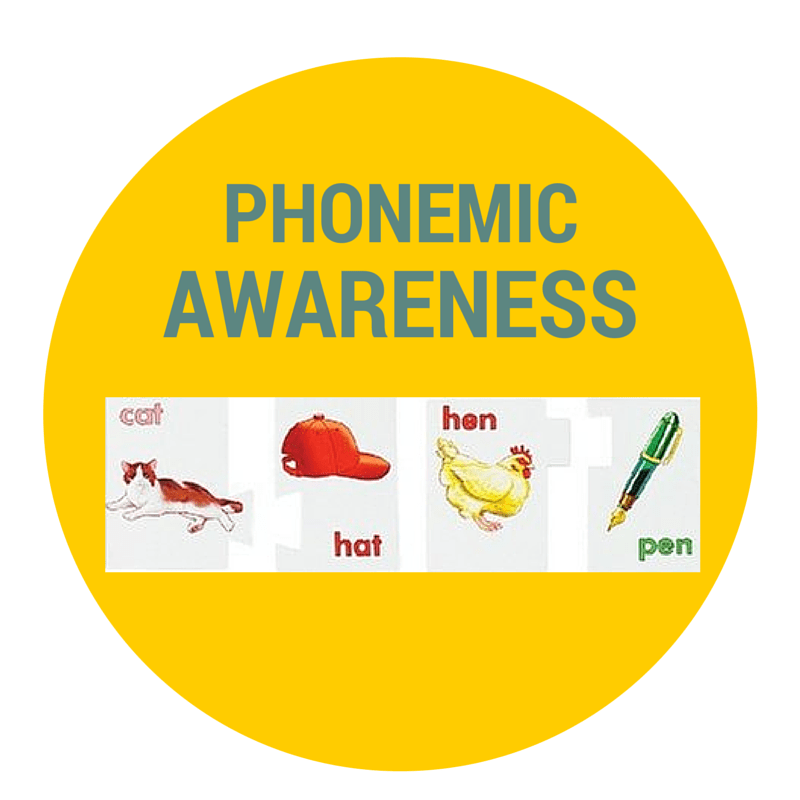
Phonemic Awareness is the ability to hear, identify, and manipulate the individual sounds which make up words. In the past few decades, large amounts of research have improved our understanding of phonemic awareness and its importance in helping children learn to read. There are hundreds of research studies conducted on all aspects of phonemic awareness, and how it affects and benefits reading and spelling abilities of young children. The National Reading Panel of the US have stated that phonemic awareness improves children’s reading and reading comprehension, and that it also helps children to learn to spell. Based on the research and reviews done by the National Reading Panel, they have concluded that teaching phonics and phonemic awareness produces better reading results than whole language programs.

When teaching phonemic awareness, children are taught the smallest units of sound, or phonemes. During the teaching process, children are taught to focus on the phonemes, and learn to manipulate the phonemes in words. Studies have identified phonemic awareness and letter knowledge as the two best school-entry predictors of how well children will learn to read during the first 2 years of instruction. In a review of phonemic awareness research, the National Reading Panel (NRP) identified 1,962 citations, and the results of their meta-analysis were impressive as stated in the NRP publication:

Overall, the findings showed that teaching children to manipulate phonemes in words was highly effective under a variety of teaching conditions with a variety of learners across a range of grade and age levels and that teaching phonemic awareness to children significantly improves their reading more than instruction that lacks any attention to phonemic awareness (PA).

Specifically, the results of the experimental studies led the Panel to conclude that PA training was the cause of improvement in students’ phonemic awareness, reading, and spelling following training. The findings were replicated repeatedly across multiple experiments and thus provide converging evidence for causal claims. [1]

As can be clearly seen, teaching children phonemic awareness early on significantly improves their reading and spelling abilities. Furthermore, the NRP research stated that these beneficial effects of phonemic awareness teaching goes well beyond the end of training period. The NRP phonemic awareness research also found that the most effective teaching method was to systematically teach children to manipulate phonemes with letters, and teaching children in small groups.

Phonemic awareness (PA) teaching provides children with an essential foundation of the alphabet system, and a foundation in reading and spelling. The NRP has stated that PA instructions is a necessary instructional component within a complete reading program.

Below are two other studies done on phonemic awareness, and its effects on reading abilities. In a study involving children aged 6 to 7 years old, researchers found that the few readers at the beginning of grade one exhibited high phonemic awareness scored at least close to perfect in the vowel substitution task, compared to none in children of the same age group who could not read when they entered school. The research also stated that phonemic awareness differences before instruction predicted the accuracy of alphabetic reading and spelling at the end of grade one independent from IQ. Children with high phonemic awareness at the start of grade one had high reading and spelling achievements at the end of grade one; however, some of the children with low phonemic awareness had difficulties learning to read and spell. The study suggested that phonemic awareness is the critical variable for the progress in learning to read. [2]

Another study looked at phonemic awareness and emergent literacy skills of 42 children with an average age of 5 years and 7 months. The researchers indicated that relations between phonemic awareness and spelling skills are bidirectional where phonemic awareness improved spelling skills, and spelling influenced the growth in phonemic skills. [3]

It is clear that with the conclusions made by the National Reading Panel and other research studies on the benefits of phonemic awareness books, children should be taught PA at a young age before entering school. This helps them build a strong foundation for learning to read and spell.

Best Phonemic Awareness Books

Notes:

1. National Institute of Child Health and Human Development. (2000). Report of the National Reading Panel. Teaching children to read: An evidence-based assessment of the scientific research literature on reading and its implications for reading instruction (NIH Publication No. 00-4769). Washington, DC: U.S. Government Printing Office.

2. Cognition. 1991 Sep;40(3):219-49.
The relationship of phonemic awareness to reading acquisition: more consequence than precondition but still important.
Wimmer H, Landerl K, Linortner R, Hummer P.
University of Salzburg, Austria.

3. Exp Child Psychol. 2002 Jun;82(2):93-115.
Emergent literacy skills and training time uniquely predict variability in responses to phonemic awareness training in disadvantaged kindergartners.
Hecht SA, Close L.


Children Learning Reading Program-Review

Is the development and education of your kid crucial to you? Also, have you been scanning for a program that will support you with teaching your child to read, so far spending several hundred dollars on uncertain programs simply doesn’t sound good to you? Well, I can understand your frustrations, as I’ve experienced similar problems myself…

Recently I ran over a step-by-step program that inspires parents to effectively teach their children to read. The brilliant thing about this program is that as long as your child can talk, it will assist you with showing your kid to read fluently. I had a few questions at first when I saw that the program guaranteed that even 2 and 3-year-old kids can be taught to read successfully. In any case, my questions were immediately gone when I saw their video evidences of little kids reading.

The Authors of the program, Jim and Elena, had built up their Children Learning Reading system, and afterward utilized it to show their own kids to read before turning 3 years of age. They indicated different clips of their young 2 year 11 months old girl reading, and I was very amazed to see how their little girl was reading when she was barely 3 years of age. I didn’t hope to see 3-year-old reading books! Here’s a video for you to see:

Who Is the Curriculum Designed For?

The Children Learning Reading program is designed for parents with small kids between the ages of 2 to 6 years of age. It is intended to show little children and little youngsters to read successfully. One significant thing to remember is that this program isn’t designed for very small kids, or youngsters who have not learned to talk yet. However, if your kid has learned out how to talk, at that point you can utilize this program to show your youngster to read.

The principal objective of the Children Learning Reading program is to enable your kid to understand how to separate printed text quickly and learn out how to read well through the basic way of growing phonemic awareness. Phonemic awareness is seemingly one of the most significant parts of figuring out how to read, and turning into a good reader. Children who need phonemic awareness regularly have understanding challenges, and end up being poor readers. Jim & Elena’s Children Learning Reading program is an amazingly straightforward, simple, and a step-by-step program. Their program includes simple exercises and practices that work to allow your child to grow phonemic awareness, and figure out how to read. Clinical examinations, and even the National Reading Panel has stated that helping children develop phonemic awareness is one of the best approaches to train your kids to read.

What is the Children Learning Reading Program Teaching module?

The program is designed to teach children in two phases, and each stage goes with it’s own guidance book and step by step exercises. Stage 1 helps your kid to develop the important foundational skills to read fluently, while stage 2 exercises are slightly advanced helping your child to display amazing reading skills.

There are 28 lessons in stage one that are easily spread out to train your kid beginning with reading printed text. The alphabet letters and sounds are introduced in a simple, reasonable, and natural order through the 28 exercises. Extremely simple words and mixing practices are used and progressively complicated words, sentences, stories, and rhymes are gradually presented with the lessons with your kids progress. When you complete stage 1 exercises with your child, your child will have just developed important reading skills that will leave you surprised.

When you complete stage 1, you can proceed to Stage 2 exercises, which include encouraging some complicated words for reading. There are 22 exercises in stage two. One of the primary important point of this stage is teaching your kid letter combinations called digraphs. The words, sentences, exercise stories, and rhymes here are more advanced.

The one thing that truly hit home for me about this program is that it doesn’t drive your kid to memorize any phonics rules! Being parents, I’m certain you can imagine how difficult it is to have little children and small kids memorize! The superb thing about Jim and Elena’s Children Learning Reading program is that all through the whole program, your child figures out how to read, and develop great reading and decoding skills without memorizing any phonics rules. This is the reason their program is so successful at instructing children to read.

Another huge benefit of this program is that the step-by-step exercises are designed to be quick and successful. Every exercise generally takes no longer than 5 to 10 minutes to finish, and a few exercises take only 2 or 3 minutes to finish. As you can see, within a short time, short exercises like these will be much more compelling and effective than drawn-out exercises. To teach your kid to read, you have to simply follow the exercises step-by-step, and spend 5 to 10 minutes every day consistently teaching your kid to read. In only 12 short weeks, you will be very satisfied that you have taken at that point time and energy to give your child the most significant ability of everyday life – Reading.

With this I totally recommend Children Learning Reading program.

Click here for the Children Learning Reading Program and start teaching your Child to Read Today!

Happy Teaching and Happy Reading

What is Phonemic Awareness?

Phonemic Awareness is defined as the ability to identify, hear, and work with the smallest units of sound known as phonemes. It is NOT the same as phonological awareness, instead, it is a sub-category of phonological awareness. For example, phonemic awareness is narrow, and deals only with phonemes and manipulating the individual sounds of words – such as /c/, /a/, and /t/ are the individual sounds that make up to form the word “cat”. Phonological awareness on the other hand, includes the phonemic awareness ability, and it also includes the ability to hear, identify, and manipulate larger units of sound such as rimes and onsets.

Phonemic awareness can be taught very early on, and will play a critical role in helping children learn to read and spell. While it’s not set in stone on when a child can learn to read, however, I do believe that a child that can speak is a child that can learn to read. Children as young as two years old can learn to read by developing phonemic awareness, and they can learn to read fluently. Please see a video of a 2 year old (2yr11months) reading below.

Below are several of the most common phonemic awareness skills that are often practiced with students and young children:

  • Phonemic identity – being able to recognize common sounds in different words such as /p/ is the common sound for “pat”, “pick”, and “play”.
  • Phonemic isolation – being able to recognize the individual sounds of words such as /c/ is the beginning sound of “cat” and /t/ is the ending sound of “cat”.
  • Phoneme substitution – being able to change one word to another by substituting one phoneme. For example changing the /t/ in “cat” to /p/ now makes “cap”.
  • Word Segmenting – the parent says the word “lap”, and the child says the individual sounds: /l/, /a/, and /p/.
  • Oral blending – the parent says the individual sounds such as /r/, /e/, and /d/, and the child forms the word from the sounds to say “red”.

Studies have found that phonemic awareness is the best predictor of reading success in young children. Research has also found that children with a high level of phonemic awareness progress with high reading and spelling achievements; however, some children with low phonemic awareness experience difficulties in learning to read and spell. Therefore, it is important for parents to help their young children develop good phonemic awareness. [1]

Being able to oral blend and segment words helps children to read and spell. According to the National Reading Panel, oral blending helps children develop reading skills where printed letters are turned into sounds which combine to form words. Additionally, word segmenting helps children breakdown words into their individual sounds (phonemes), and helps children learn to spell unfamiliar words.

As a young child begins to develop and master phonemic awareness skills, they will discover an entirely new world in print and reading. You will open up their world to a whole new dimension of fun and silliness. They will be able to read books that they enjoy, develop a better understanding of the world around them through printed materials, and have a whole lot of fun by making up new nonsense words through phonemic substitutions.

For example, we taught our daughter to read at a young age – when she was a little over 2 and a half years old. Before she turned three, she would run around the house saying all types of silly words using phonemic substitution. One of her favorite was substituting the letter sound /d/ in “daddy” with the letter sound /n/. So, she would run around me in circles and repeatedly say “nanny, nanny, come do this” or “nanny, nanny, come play with me” etc… Of course, she only did this when she wanted to be silly and to make me laugh, at other times, she would of course properly refer to me as “daddy”, and not “nanny”. She is well aware of the differences between these words and is fully capable of using phonemic substitution to change any of the letters in the words to make other words.

Click here to learn how to easily and quickly teach your child to read.

Notes:

1. Cognition. 1991 Sep;40(3):219-49.
The relationship of phonemic awareness to reading acquisition: more consequence than precondition but still important.
Wimmer H, Landerl K, Linortner R, Hummer P.
University of Salzburg, Austria.

Fun and Learn Activities for KIDS

Thinking about fun activities to engage your kids.

There are a lot of fun approaches to take as a family and gain some dependable experiences while you do it during this pandemic.

From empowering your youngster’s with expressions and specialties, to releasing their star potential or bringing out the artist in them, here are 15 Fun Activities for kids to try at home.

Fun activities for kids and Family to beat the pandemic blues

In these long stretches of lockdown, you need not stress in the event that you are coming up short on approaches to keep your kids engaged. Check out the ways to engage the kids to fun learning.

Finger painting

Let your child express strong streak of artistry and creativity with this messy but fun way to paint. Just spread out a plastic sheet or newspapers and let them get themselves messy and creative.

Crafts

There are a lot of Art & Crafts stuff that your child would love to do. Clay Modelling, Salt dough, and scented dough modeling, decorate bottles, DIY crafts, and many many more you can explore on YouTube.

Origami

Discover the ancient art of paper folding in yourself and your kids. This can keep the children amused for hours and it makes very little mess, unlike the finger painting. These models can later be used to decorate the house and show the creativity of kids to your relatives once the lockdown is over. Some interesting origami models you can consider.

Foreign language

There are a lot of online apps such as Duolingo, MemRise, and Babbel you can use to teach and learn some basics of foreign languages along with your kids.

Play an instrument

If you know to play an instrument, this is another creative thing you can share you’re your children. Even if you don’t there are a lot of tutorials for playing instruments online. So now is the perfect time to do so.

Cooking together

Now that you are home, why not use this extra time to teach your child this very necessary life skill? You can teach them a lot of things: Baking cake and cookies, make fruit ice lollies, teach them to make their own milkshakes with their favorite fruits.

This is a great way to teach your child the basics of cooking, and maybe later when you start with your regular schedule after the lockdown they might surprise you with some great dishes when returning back from work.

Engage in Board Games

Almost everybody has taken their board games out of the closet. You would have seen people posting pictures of Playing the old board games on social media. This could be the moment you can tell your childhood stories to your kids.

Storytime

Encourage your kids to read books during this time of lockdown. Take turns to read stories to each other. Or just play an audible bookYou can also ask your kids to write their own stories and read them.

Get together your collectibles

Grab your child’s favorite little jewels, along with old tickets from fun days out, postcards from holidays, photographs from their initial years, and whatsoever your child likes and put them in a scrapbook together to keep them safe.

Indoor gardening

Teach the importance of plants. Give each of your children an indoor plant to upkeep and watch it grow. Tell them how to take care of it and watch it grow along with your child’s horticultural skills.

Making cards

Take out your annual calendar and make a note of all the occasions you missed during the lockdown. i.e birthdays, anniversaries, and special events coming up or just miss you cards. Then engage them in making personalized cards for each of them which you can post them.

Car wash & Gardening

So as the summer weather is here, take them to the garden or ask them to help you with the car wash or watering the garden. Kids love to play with water guns. Playing with water is one of the most loved activities kids enjoy.

Play hopscotch and skipping games

If you have some outdoor space or a small garden, Play hopscotch or teach your child the skipping. This would not only help you keep fit but also keep your children busy with some outdoor activities.

Karaoke

Karaoke with the whole family is another fun activity to get along. Karaoke in parties with friends and relatives brings the party alive. Lockdown and social distancing have discouraged parties, but not Karaoke. So why not grab a Karaoke mike and have fun activities with kids and family at home during this time of stress. There are a million karaoke songs to choose from on YouTube.

Group video calls

Missing your friends and relatives. Just get them all along in a group video call. There nothing more can keep your children and your parents happy.

Go back

Your message has been sent

Warning
Warning
Warning
Warning

Warning.

Go back

Your message has been sent

Warning

Related Posts

Design a site like this with WordPress.com
Get started